In today’s increasingly competitive wealth management landscape, differentiation matters more than ever. Advisors are navigating an environment where investment products, portfolio strategies, and fee structures have become increasingly similar across firms. As a result, clients, especially high-net-worth individuals, are looking for something deeper from their advisor relationships: guidance that reflects their values, their families, and the legacy they hope to create.
New findings from the 2026 TPI Study of the Philanthropic Conversation underscore just how important that shift has become.
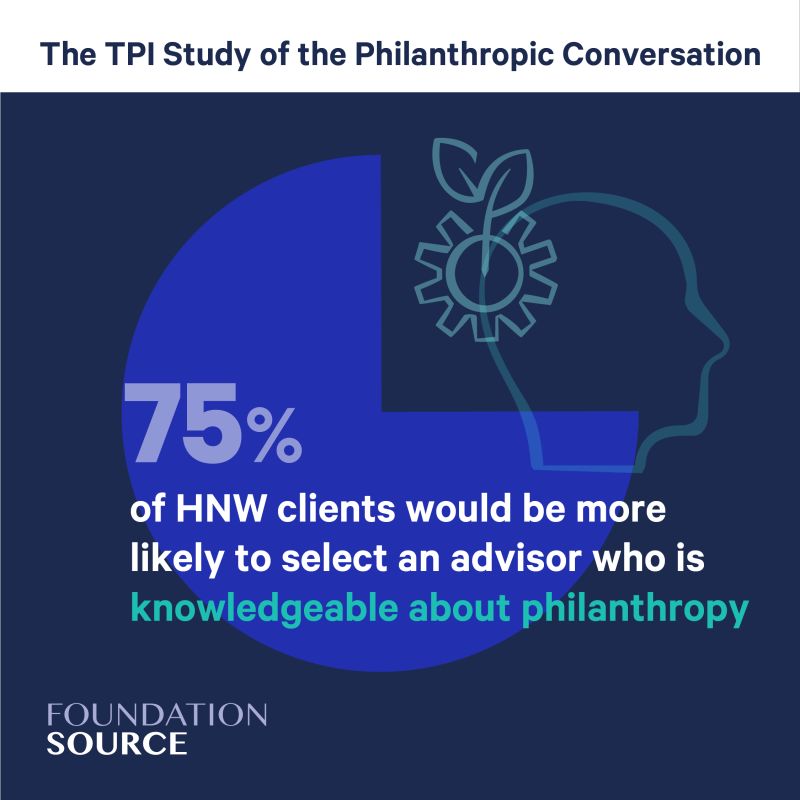
According to the study, conducted by The Philanthropic Initiative (TPI) and co-sponsored by DAFgiving360, Foundation Source, and The Boston Foundation, 75% of high-net-worth clients say they would be more likely to select an advisor who is knowledgeable about philanthropy, a significant increase from just 40% in 2018.
At Invest in Others, these findings reinforce something we have long believed: charitable conversations and charitable work are not peripheral to the advisor-client relationship, they are central to building meaningful, enduring trust.
For years, we have seen firsthand how philanthropic and charitable engagement strengthens relationships between advisors and clients. Advisors who understand charitable planning and who are willing to engage clients in conversations about purpose, impact, and giving are often able to move beyond transactional relationships and into truly holistic advising. They are helping clients define not only financial success, but personal significance.
At the same time, an advisor’s own charitable engagement within their community can further strengthen that trust and connection. When clients see advisors actively volunteering, serving on nonprofit boards, supporting local causes, or giving back in meaningful ways, it demonstrates authenticity and a genuine commitment to the communities they serve. Those actions can reinforce shared values, deepen credibility, and help clients feel they are working with someone who understands the importance of impact beyond financial returns.
The study’s findings make clear that advisors themselves recognize this value. Ninety percent of advisors surveyed said philanthropic conversations are good for business. Ninety-two percent said those discussions help establish new client relationships, while nearly nine in ten said they deepen existing ones. These are not small shifts in sentiment; they represent a broader evolution in the role of the modern advisor.
Today’s clients increasingly expect advisors to understand the full picture of their lives. They want support navigating family dynamics, legacy planning, community impact, and generational wealth transfer. A conversation about charitable giving often opens the door to deeper discussions around values, long-term goals, and what clients hope their wealth will accomplish beyond financial returns.
Importantly, these conversations also create opportunities for stronger intergenerational engagement. As trillions of dollars are expected to transfer between generations in the coming decades, advisors are recognizing the importance of involving children and grandchildren in family giving discussions. According to the study, 95% of advisors believe conversations like these help extend relationships to the next generation, an increasingly critical priority for firms focused on long-term client retention.
At Invest in Others, we have consistently seen how charitable work creates stronger communities while also strengthening the advisor profession itself. Advisors who embrace it are demonstrating empathy,
As the advisory profession continues to evolve, the ability to engage thoughtfully around charitable giving may prove to be one of the most important differentiators available. More importantly, it has the potential to create deeper human connections, the kind that sustain relationships, strengthen communities, and ultimately define lasting impact.